
An Automated Attendance System Using Enhanced Face Detection and Recognition
DOI:
https://doi.org/10.65521/oaijse.v9i1s.3689Keywords:
Abstract
Attendance management is a critical administrative function in educational institutions; however, conventional methods such as manual roll calls are time-consuming, error-prone, and susceptible to proxy attendance. This study proposes an automated attendance system based on enhanced face detection and recognition techniques, offering a contactless and efficient solution. The system utilizes a webcam for real-time image acquisition and incorporates adaptive preprocessing methods, including
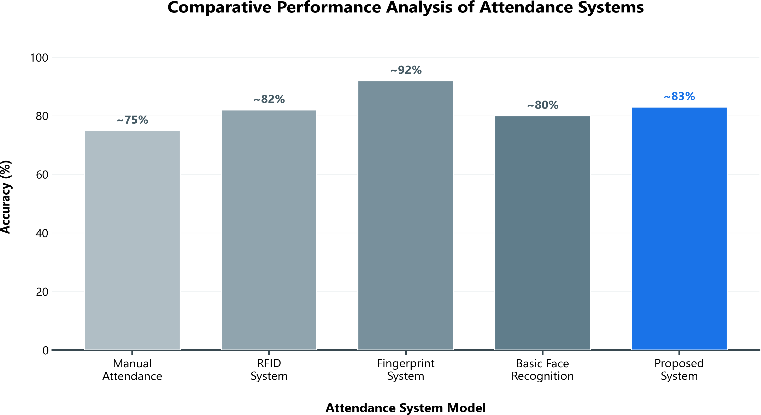
contrast stretching and brightness normalization, to ensure robustness under varying illumination conditions. Face detection is performed using multiple Haar Cascade classifiers, while recognition is achieved through a hybrid template matching approach with adaptive thresholding. A human-in-the-loop verification mechanism is introduced to minimize false recognition, and attendance is recorded in an Excel format with duplicate prevention. Experimental evaluation demonstrates reliable real-time performance without relying on computationally intensive deep learning models. Without using computationally demanding deep learning models, experimental evaluation shows dependable real-time performance. The system is appropriate for real-world classroom and small-scale institutional applications because it delivers consistent accuracy and low processing latency under a variety of environmental conditions. Additionally, its lightweight architecture makes it simple to deploy on common computing equipment.
Downloads
Published
How to Cite
Issue
Section
License

This work is licensed under a Creative Commons Attribution-NonCommercial-ShareAlike 4.0 International License.
