
LLM-Assisted Cyber Threat Analysis Using Static Features and Malware Pattern Mining: A Comprehensive Review and Future Directions
DOI:
https://doi.org/10.65521/oaijse.v9i1s.3598Keywords:
Abstract
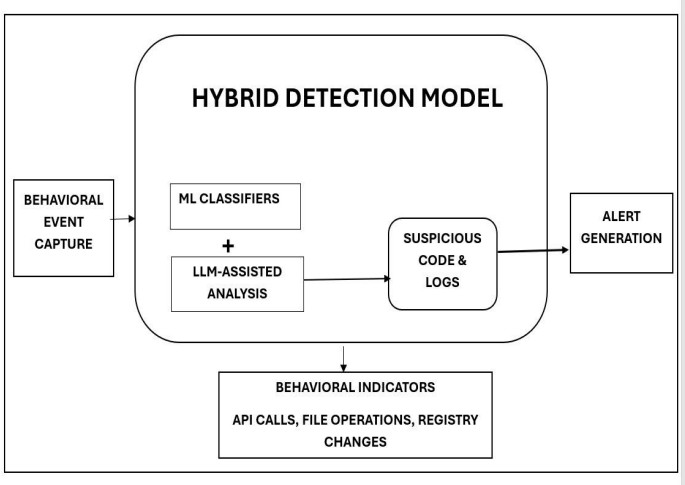
Cybersecurity is one of the most significant global challenges due to rapid growth of ransomware and polymorphic malware. Traditional detection methods, such as signature-based and static analysis techniques, are effective only for known threats and often fail against zero-day attacks and obfuscated malware. The paper focuses on behavior-based malware detection, which enables real time analysis and improved detection of unknown malware. The proposed system employs a hybrid approach that combines dynamic behavioral indicators with AI-driven prompt engineering which used LLM and ML hybrid model. Experiments were conducted using dataset including [Malware Analysis Datasets: API Call sequences, Malware Analytics Dataset Leveraging Cuckoo Sandbox, Malware detection model, CICIDS-2017], and performance evaluated using standard metrics. The results demonstrate that the proposed approach achieves more accuracy, outperforming traditional models, highlighting its effectiveness for early-stage malware detection.
Downloads
Published
How to Cite
Issue
Section
License

This work is licensed under a Creative Commons Attribution-NonCommercial-ShareAlike 4.0 International License.
