
Missing Person Detection in Railway Stations Using AI-Based YOLOv8 and Clothing Attribute Recognition
DOI:
https://doi.org/10.65521/oaijse.v9i1s.3593Keywords:
Abstract
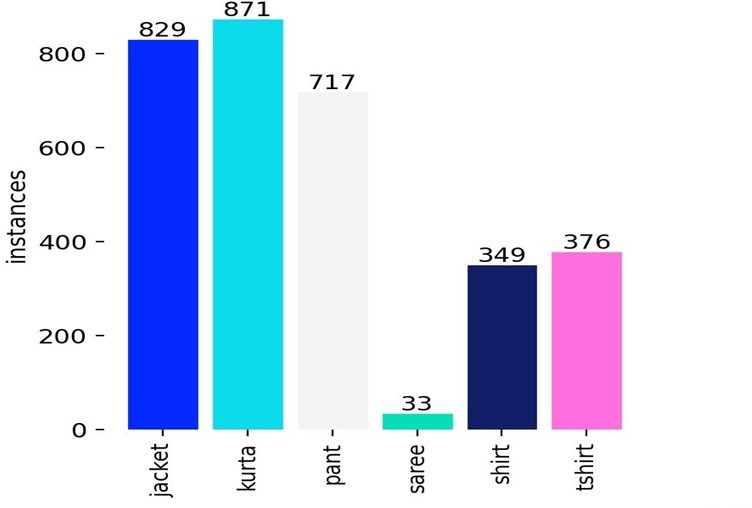
Identifying missing persons in crowded public environments such as railway stations remains a difficult task for law enforcement agencies due to heavy passenger flow, frequent visual obstructions, and the limitations of manual CCTV monitoring. To address these challenges, this work presents an automated missing person detection approach based on artificial intelligence (AI) techniques, combining the YOLOv8 deep learning model with clothing attribute recognition [1]. The system detects individuals from surveillance video streams and extracts distinguishing clothing attributes, such as garment type and color, which assist in identification when facial information is partially visible or unavailable. The proposed system architecture consists of video preprocessing, YOLOv8-based person detection, clothing attribute analysis, and an alert generation mechanism. Experimental evaluation conducted on railway-like surveillance data achieves a mean Average Precision (mAP@0.5) of 94.4% while maintaining efficient processing suitable for real-time monitoring. The results demonstrate that incorporating clothing-based cues enhances identification reliability in crowded scenes and supports practical deployment in large-scale public surveillance infrastructures.
Downloads
Published
How to Cite
Issue
Section
License

This work is licensed under a Creative Commons Attribution-NonCommercial-ShareAlike 4.0 International License.
