Fake Product Identification by QR Code Using Blockchain
DOI:
https://doi.org/10.65521/ijeecs.v15i1.3425Keywords:
Abstract
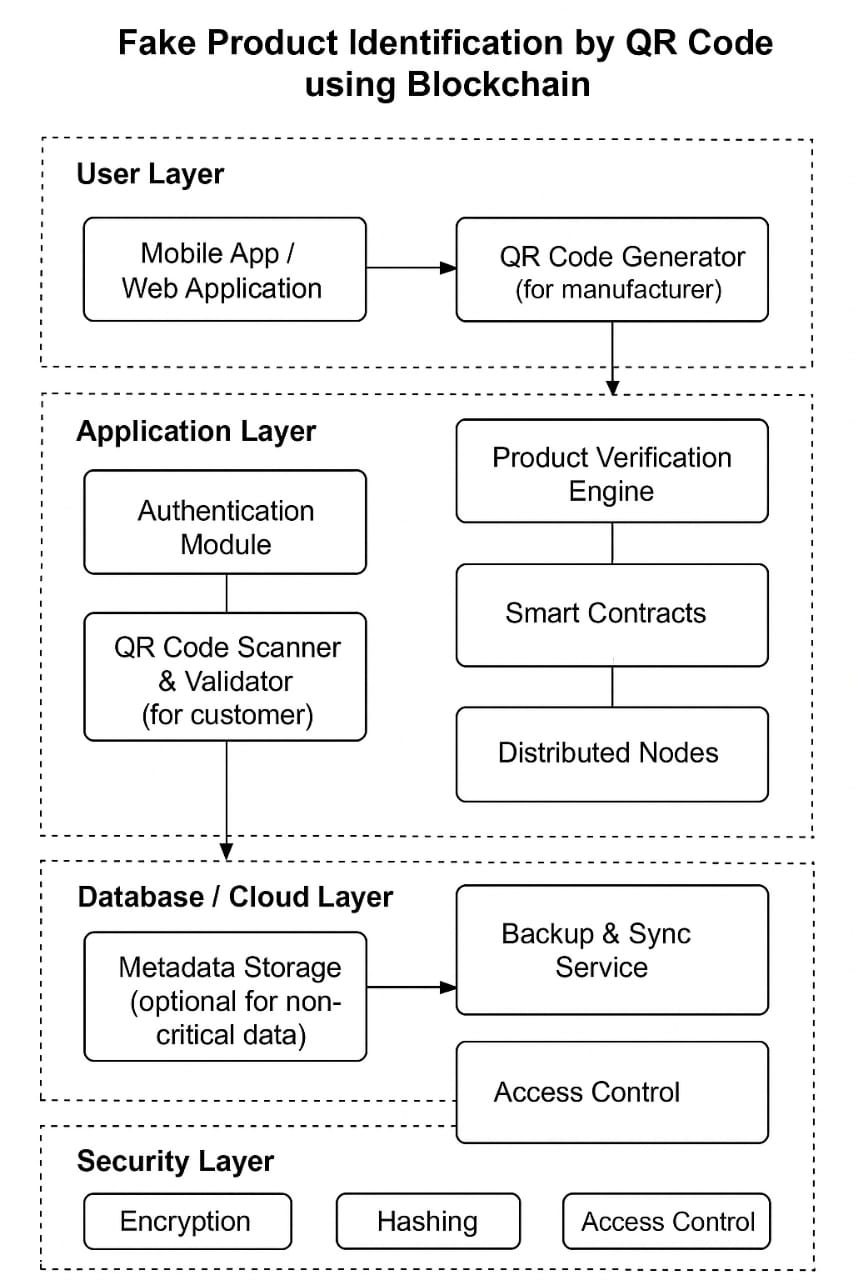
Counterfeit products present a serious threat to industries, consumers, and economies, resulting in financial losses, brand damage, and safety risks. Traditional product authentication methods are often centralized and prone to tampering, making them unreliable and lacking transparency. To overcome these limitations, the proposed system integrates Blockchain technology with QR codes to create a secure and transparent authentication mechanism. Each product is assigned a unique QR code during manufacturing, and its details are stored on a decentralized blockchain ledger. Consumers can easily verify the authenticity of a product in real time by scanning the QR code using a mobile or web application, ensuring trust and reliability.
The system enhances supply chain visibility by recording every transaction—from manufacturing to distribution and retail—as immutable blocks on the blockchain. This creates a complete and traceable history of the product, enabling stakeholders to track its journey and quickly identify any point of tampering or fraud. The use of smart contracts can further automate verification and validation processes, ensuring that only genuine products move through the supply chain. Additionally, the decentralized nature of blockchain eliminates dependence on a single authority, reducing the risk of data manipulation and increasing overall system security.
Moreover, the proposed solution is scalable, user-friendly, and applicable across multiple industries such as pharmaceuticals, electronics, luxury goods, and food. It can be further enhanced by integrating technologies like IoT for real-time monitoring and data analytics for improved decision-making and demand forecasting. By combining transparency, security, and ease of use, this system not only combats counterfeiting but also strengthens consumer confidence and brand reputation. Ultimately, it provides a future-ready, reliable approach to ensuring product authenticity in a globalized market.