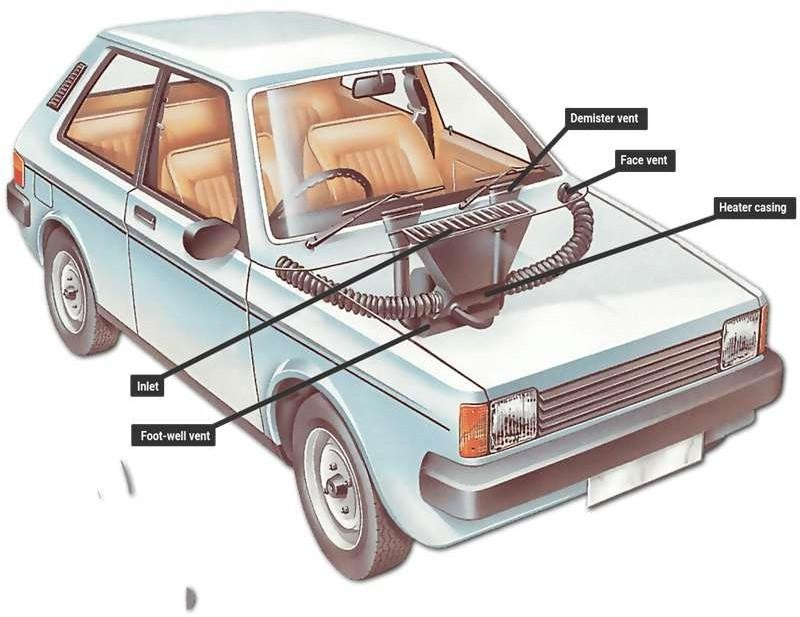
Flow Analysis of Car AC Duct to Find Temperature, Velocity and Pressure Difference
Keywords:
Abstract
Airflow management represents a critical and multidisciplinary aspect of modern automotive engineering, influencing passenger thermal comfort, system efficiency, aerodynamic drag, and electric vehicle driving range. As the global automotive industry continues its transition toward electrification and sustainability, optimizing both internal heating, ventilation, and air-conditioning (HVAC) airflow systems and external aerodynamic characteristics has become increasingly essential. This research presents a comprehensive Computational Fluid Dynamics (CFD)-based investigation integrating internal duct flow optimization and external aerodynamic drag reduction through S-duct implementation. Reynolds-Averaged Navier–Stokes (RANS) simulations were employed to analyze airflow behavior under steady-state conditions. Internal HVAC duct modifications, including outlet geometry transformation and elbow angle optimization, resulted in airflow velocity improvements ranging from 4% to 9% while maintaining outlet velocity uniformity within 1.3%. External aerodynamic optimization using an S-duct configuration demonstrated a measurable reduction in drag coefficient, corresponding to an estimated 48 km improvement in electric vehicle driving range under highway conditions. The results highlight the importance of adopting a holistic airflow optimization strategy that integrates internal thermal management and external aerodynamic performance to improve comfort, efficiency, and sustainability simultaneously.