Weather Based Blight Prediction for Pomegranate using Machine Learning
Keywords:
Abstract
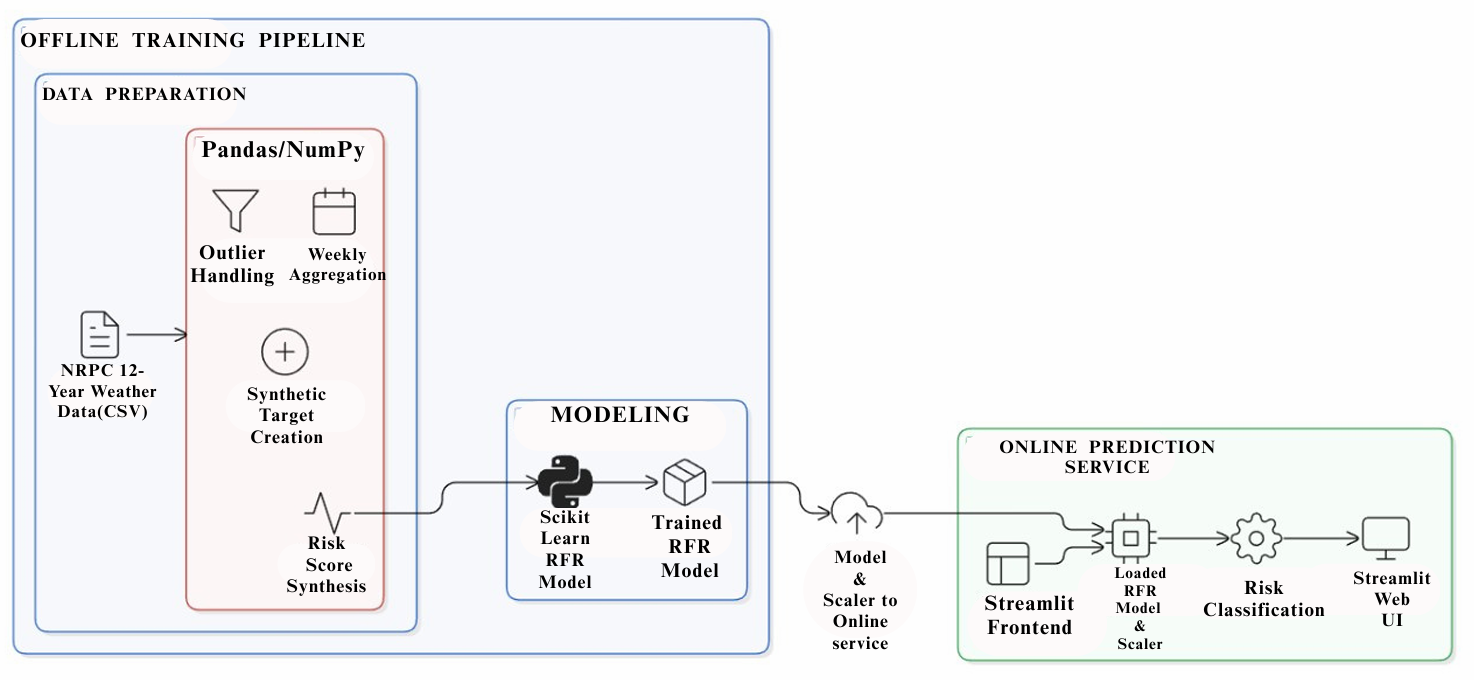
Bacterial blight is a rising concern for global pomegranate farming. The traditional methods for identifying and managing this disease are mostly reactive in nature. Generally, farmers identify the problem only when the symptoms are apparent. This might already have spread by the time farmers identify it, as early prevention is difficult. This has resulted in huge losses for farmers. To avoid such problems, this research aims to provide an early warning system for farmers, especially for pomegranate farming. This project involves collecting data from Indian Council of Agriculture Research(ICAR)- National Research Centre on Pomegranate(NRCP), Solapur. This data includes twelve plus years of data and parameters such as temperature, humidity, rainy days, and sunshine hours. This data can help in building a more precise predictive model. This research aims to develop a hybrid machine learning model based on Random Forest Regressor(RFR) to solve complex, non-linear relationships between environmental conditions and disease occurrence. This can convert weather conditions into a Risk Score (between 0 and 1). The predictions will come under three categories: Low, Medium, and High. This indicates that the model is working correct, as it has given an R² value of 0.9765 and achieved 91.3% accuracy. The results have showed us that, integration of agriculture dataset with AIML gives useful insights to agriculturalist and other related people about the efficient and accurate cultivation of pomegranates.