
Measuring the Predictive Power of Data Mining Techniques in Forecasting Social Media Addiction and Excessive Usage Trends
DOI:
https://doi.org/10.65521/ijacte.v15i1S.1331Keywords:
Abstract
The exponential rise of social media usage has redefined communication, connectivity, and lifestyle across the globe, particularly in developing nations such as India. However, this digital transformation has also led to an alarming surge in social media addiction (SMA)—a behavioral condition characterized by compulsive engagement, mood modification, and diminished self-regulation. This study presents an integrated predictive framework that combines psychometric assessment with data mining and machine learning algorithms to forecast SMA and excessive usage trends among Indian users.
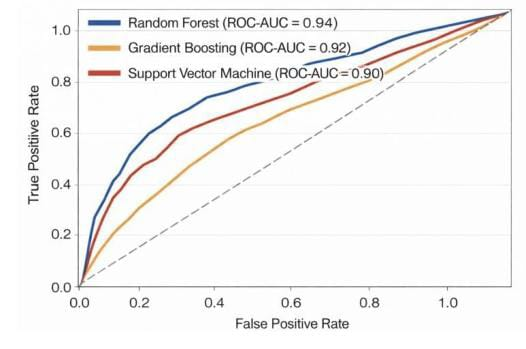
A cross-sectional dataset comprising 750 respondents aged 18–35 years from five metropolitan cities (Mumbai, Delhi, Bengaluru, Hyderabad, and Pune) was analyzed using two validated instruments: the Bergen Social Media Addiction Scale (BSMAS) and the Scale of Excessive Use of Social Networking Sites (SEUS-14). Data were processed using Random Forest (RF), Gradient Boosting Classifier (GBC), and Support Vector Machine (SVM) models to predict addiction risk levels. The Random Forest model achieved the highest performance with an accuracy of 92.6% and ROC–AUC of 0.94, confirming its robustness and generalization capability.
Psychometric analysis revealed moderate addiction and overuse levels, with mood modification, tolerance, and compulsive checking emerging as the most dominant behavioral features. A strong positive correlation (r = 0.74, p < 0.001) between BSMAS and SEUS-14 scores demonstrated concurrent validity, confirming that psychological dependency and behavioral excess represent converging constructs of digital addiction.
The results substantiate the biopsychosocial model of behavioral addiction, showing that SMA arises from the interplay of emotional regulation needs, social validation cycles, and habit reinforcement. By integrating machine learning and behavioral science, this research contributes to the emerging field of computational psychology, offering a data-driven mechanism for early detection, digital wellness intervention, and policy formulation. The study underscores the potential of AI-assisted predictive analytics as a scalable and ethical solution for monitoring digital well-being within the Indian socio-technological context.
Downloads
Published
How to Cite
Issue
Section
License

This work is licensed under a Creative Commons Attribution-NoDerivatives 4.0 International License.
