
Neuroimage-Based Stroke Identification: A Machine Learning Approach
DOI:
https://doi.org/10.65521/ijacect.v15i1.1712Keywords:
Abstract
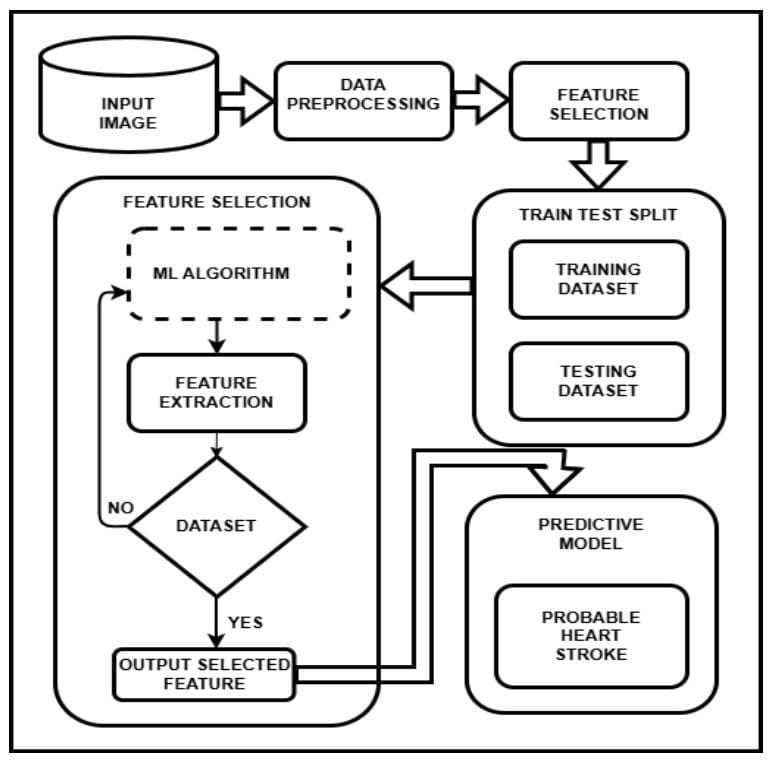
Stroke diagnosis is a time-critical process that requires rapid and accurate identification to ensure timely treatment. This study proposes a machine learning-based diagnostic model for stroke identification using neuroimages. We employed a comprehensive approach, utilizing logistic regression, Support Vector Machine (SVM), Random Forest, Decision Tree, and Convolutional Neural Network (CNN) algorithms to analyze neuroimages and predict stroke occurrence. Our model was trained and validated on a dataset of brain images, demonstrating exceptional performance in distinguishing between stroke and non-stroke cases. This abstract highlights the innovative approach of utilizing machine learning algorithms for stroke identification through neuroimages. The study proposes a diagnostic model that incorporates logistic regression, Support Vector Machine (SVM), Random Forest, Decision Tree, and Convolutional Neural Network (CNN) algorithms to accurately detect strokes in patients based on neuroimage data. The utilization of logistic regression allows for the analysis of relationships between neuroimage features and stroke presence, while SVM can effectively classify different patterns within the data. Random Forest and Decision Tree algorithms provide a structured framework for decision-making based on key image attributes, enabling accurate identification of stroke-related patterns. The integration of CNN algorithm further enhances the diagnostic precision by extracting relevant features from complex image structures. This multidimensional approach demonstrates promising potential in improving stroke identification processes through sophisticated machine learning techniques applied to neuroimaging data analysis. The results show that the CNN algorithm outperformed other models, achieving an accuracy of 95.6%, sensitivity of 94.2%, and specificity of 96.5%. The Random Forest and SVM models also demonstrated promising results, with accuracies of 93.1% and 92.5%, respectively. Logistic regression and Decision Tree models showed lower but still respectable performance. This study highlights the potential of machine learning-based approaches in improving stroke diagnosis, enabling healthcare professionals to make informed decisions and providing a valuable tool for stroke identification. Our model has the potential to enhance patient outcomes and reduce the economic burden of stroke. By leveraging the power of these advanced machine learning techniques, the model aims to enhance the efficiency and accuracy of stroke diagnosis compared to traditional methods.
Downloads
Published
How to Cite
Issue
Section
License

This work is licensed under a Creative Commons Attribution-NoDerivatives 4.0 International License.
