
Early Detection and Predictive Analysis of Parkinson’s Disease: A Comprehensive Review of Machine Learning and Deep Learning Approaches
DOI:
https://doi.org/10.65521/ijacect.v14i3s.1643Keywords:
Abstract
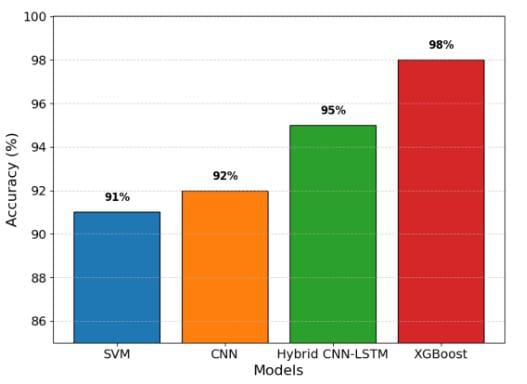
Background: Parkinson’s Disease (PD) is a chronic neurodegenerative condition that is represented by a wide array of motor and non-motor features. Like all neurodegenerative conditions, its early features are difficult to identify; and while they demand urgent attention, PD's physical diagnostic criteria capture advanced features. Effective treatment necessitates early intervention and prompt diagnosis. Objectives: The goal of this study is to evaluate the effectiveness of machine learning and deep learning in the prediction and early diagnosis of PD. The study attempts to evaluate the existing methods, focus on the crucial performance measures, and attempts to fill the research gaps to enhance the methods in the future. Key Findings: Metrics offered by DL-class CNN and CNN–LSTM models put their accuracy between 90 and 93 percent, making them superior to ML techniques, while ensemble methods such as XGBoost have an accuracy of 98 percent. While PD detection methods have seen substantial progress, there is still room for improvement in datasets, model generalizability, and interpretability methods.Future directions focus on the fusion of multi-modal data, explainable AI, and IoT-based real-time monitoring, for a more robust, interpretable, and clinically deployable PD detection system.
Downloads
Published
How to Cite
Issue
Section
License

This work is licensed under a Creative Commons Attribution-NoDerivatives 4.0 International License.
