
TripMind: An Agentic AI-Based System for End-to-End Travel Planning
DOI:
https://doi.org/10.65521/ijacte.v15i1.2600Keywords:
Abstract
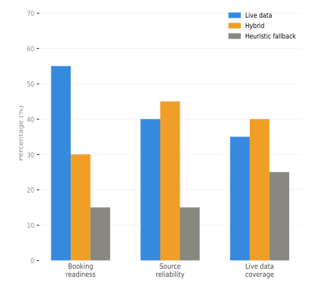
A trip usually means moving back and forth between multiple platforms for destination research, cost estimation, flight comparison, hotel search, weather checking, and itinerary preparation. While conversational assistants can suggest places or activities, they often stop short of turning user constraints into a usable trip plan. TripMind addresses this gap as an agentic AI-based system for end-to-end travel planning. It accepts free-form travel requests and turns them into structured outputs through a coordinated multi- agent pipeline. Separate agents handle budget feasibility, flight estimation, hotel planning, weather interpretation, itinerary generation, and final travel advice, while a Spring Boot backend manages session state, orchestration, persistence, and provider integration. The system also exposes planning-intelligence signals such as booking readiness, source reliability, and live-data coverage so that users can better judge the quality of the generated plan. The final response includes a feasibility verdict, cost breakdown, contextual recommendations, a day-by-day itinerary, and booking links populated with trip parameters. The work illustrates how an agentic architecture can support more grounded and practically useful travel planning than a generic conversational travel assistant.
Downloads
Published
How to Cite
Issue
Section
License

This work is licensed under a Creative Commons Attribution-NoDerivatives 4.0 International License.
