
Analysis of SVM-based Machine Learning Techniques to Improve the Accuracy of Disease Prediction in the Healthcare Sector
DOI:
https://doi.org/10.65521/ijacte.v14i1.1529Keywords:
Abstract
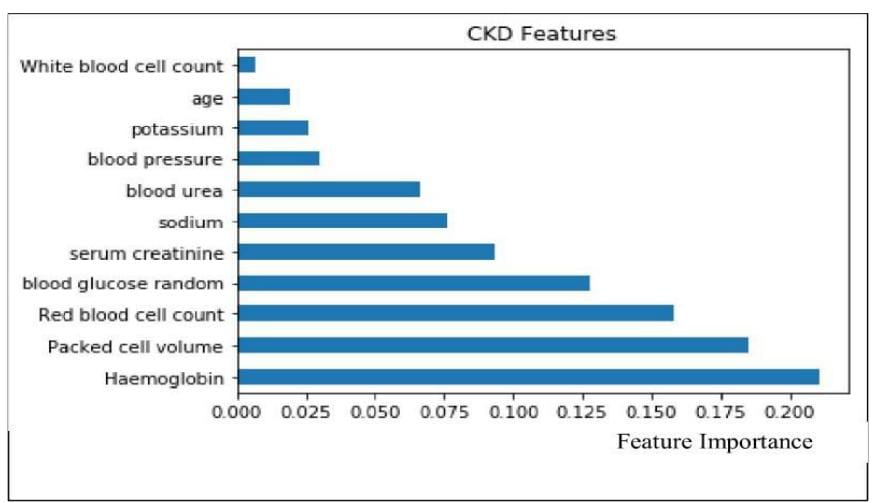
This study employs an ensemble feature selection model—which combines wrapper and filter techniques—to extract critical characteristics from a dataset, with a focus on the UCI repository's benchmarking heart disease dataset. To assess the precision of the predictions, numerous machine learning approaches were fed the features that were ultimately chosen. Using a radial basis function, an enhanced Support Vector Machine (SVM) was suggested to improve healthcare prediction accuracy. In order to choose better support vectors, this SVM- Radial bias technique was fine-tuned using Particle Swarm Optimisation (PSO). Using the Chronic Kidney Disease (CKD) dataset from the UCI repository, the model's performance was tested extensively. The suggested model outperformed baseline machine learning algorithms like Random Forest (RF), Decision Trees (DT), and conventional support vector machine (SVM) techniques, with a remarkable accuracy of 98.7 percent.
Downloads
Published
How to Cite
Issue
Section
License

This work is licensed under a Creative Commons Attribution-NoDerivatives 4.0 International License.
