Artificial Intelligence Techniques for Pest Identification and Control in Smart Agriculture Using Scalable Quantum Convolutional Neural Networks and Wireless Sensor Networks: Trends and Challenges
DOI:
https://doi.org/10.65521/ijeecs.v13i2.2672Keywords:
Abstract
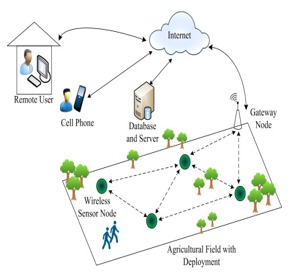
The integration of Artificial Intelligence (AI) in smart agriculture has significantly transformed pest identification and control strategies, enabling precision farming and sustainable crop management. Traditional pest monitoring techniques are labor-intensive, time-consuming, and often ineffective in large-scale agricultural environments. Recent advancements in deep learning, particularly Convolutional Neural Networks (CNNs), have demonstrated high accuracy in pest detection using image-based datasets. Moreover, the incorporation of Wireless Sensor Networks (WSNs) allows real-time monitoring of environmental conditions such as humidity, temperature, and pest activity, facilitating early intervention. Emerging paradigms such as Quantum Convolutional Neural Networks (QCNNs) further enhance computational efficiency, scalability, and pattern recognition capabilities, making them suitable for complex agricultural datasets. AI-enabled IoT systems integrate sensor data and image analytics to automate pest detection and control processes. Studies indicate that AI-driven pest detection systems can achieve over 90–99% accuracy, significantly improving crop yield and reducing pesticide usage. However, challenges such as data scarcity, energy constraints in WSNs, model interpretability, and deployment costs remain critical barriers. This paper reviews recent trends, analyzes comparative studies, and highlights future research directions for scalable, intelligent pest management systems.