A wearable haptic glove for dumb people using flex sensors to provide tactile feedback
DOI:
https://doi.org/10.65521/ijaeee.v14i1.527Keywords:
Abstract
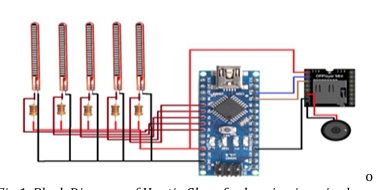
The integration of wearable haptic technology has emerged as a promising solution for enhancing spatial awareness in individuals with hearing impairments. This review explores the development and application of a haptic glove designed to provide real-time spatial cues through vibratory or pressure feedback. The glove utilizes flex sensors embedded into the fabric to detect finger movements and hand gestures, which are translated into electrical signals and processed by a microcontroller to activate corresponding haptic responses. These feedback patterns assist users in perceiving environmental stimuli, such as object proximity and directional changes, thereby compensating for the absence of auditory cues. By enabling greater independence in navigating both indoor and outdoor environments, this wearable device aims to improve the quality of life for hearing-impaired individuals. The paper also discusses challenges in system design, including sensor accuracy, user comfort, and adaptive feedback mechanisms. Future advancements in sensor technologies, machine learning, and personalization strategies are also highlighted as areas for further exploration.