AI-Driven Cyber-Physical System Security: Intrusion Detection and Predictive Threat Intelligence Models
DOI:
https://doi.org/10.65521/ijaece.v14i2.2727Keywords:
Abstract
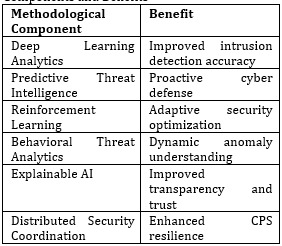
AI-Driven Cyber-Physical System (CPS) Security has become a critical research area for protecting interconnected intelligent infrastructures against sophisticated cyber threats and distributed attacks. Cyber-Physical Systems combine computational intelligence, embedded sensors, communication networks, industrial control systems, and physical infrastructures to support real-time monitoring and automation in smart grids, industrial IoT, healthcare, transportation, and smart city ecosystems. However, increasing connectivity has also increased vulnerabilities to malware, DDoS attacks, false data injection, ransomware, insider threats, and advanced persistent threats. Traditional rule-based security mechanisms often fail to detect evolving attack patterns in real-time environments. Artificial Intelligence, including machine learning, deep learning, and predictive analytics, has therefore emerged as an effective solution for intelligent intrusion detection and predictive threat intelligence generation. This research presents an AI-driven CPS security framework integrating deep learning-based anomaly detection, behavioral threat analytics, reinforcement learning-based adaptive security optimization, predictive threat intelligence, and distributed security coordination mechanisms. Advanced AI techniques such as CNNs, LSTMs, Graph Neural Networks, federated learning, and explainable AI-based intrusion detection systems are explored to strengthen cyber defense. The study also identifies key challenges including high-dimensional attack data, adversarial attacks, scalability limitations, privacy concerns, real-time detection latency, and explainability issues. Experimental evaluations demonstrate that AI-integrated CPS security frameworks significantly improve intrusion detection accuracy, adaptive cyber defense, predictive threat intelligence, and attack mitigation efficiency compared with traditional signature-based cybersecurity systems, thereby supporting resilient next-generation cyber-physical infrastructures.