Trackify: An Intelligent Behavioral Assistant and AI-Driven Habit Formation Platform
DOI:
https://doi.org/10.65521/ijacte.v15i2S.2994Keywords:
Abstract
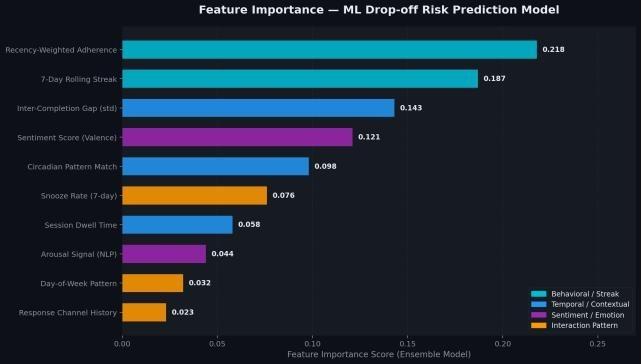
Habit consistency represents one of the most significant challenges in personal development and behavioral science, with research indicating that the majority of individuals abandon newly formed habits within the first three to four weeks of adoption. The resulting skills gap—between the aspiration to build productive routines and the knowledge or tooling to sustain them—remains largely unaddressed by conventional habit-tracking applications, which rely on static reminders, binary check-ins, and generic motivational prompts. This paper presents Trackify, a comprehensive web and mobile-based intelligent behavioral assistant designed to democratize behavioral science through an intuitive, AI-driven, end-to-end platform for habit formation and maintenance. Trackify features a React.js / Progressive Web App (PWA) frontend integrated with a Node.js/Express and FastAPI backend, powered by scikit-learn and XGBoost machine learning models, a Reinforcement Learning (RL) coaching agent for personalized nudging, sentiment-aware NLP analysis via BERT-based transformers, and a drop-off risk prediction engine utilizing an ensemble of XGBoost and LSTM models. An 8-week pilot study demonstrated that the AI-Adaptive system achieved a 68% habit continuation rate compared to 37% for static reminder baselines (+31 percentage points), improved average weekly habit completions by +16 pp, improved Nudge Click-Through Rate by +15 pp, and elevated user satisfaction scores by +27 pp. These results validate Trackify’s capacity to meaningfully reduce user cognitive effort while substantially improving behavioral outcomes.