AI Powered Smart Forecasting for Zero Food Waste
DOI:
https://doi.org/10.65521/ijacte.v15i1.2939Keywords:
Abstract
Food waste has become a serious challenge in modern retail systems due to inaccurate demand estimation and inefficient inventory planning. Conventional forecasting approaches depend heavily on past averages and manual decision-making, which often leads to overstocking, spoilage, and financial loss. This research presents a final-phase implementation of an AI-based smart forecasting system aimed at reducing food waste through accurate demand prediction and automated inventory insights.
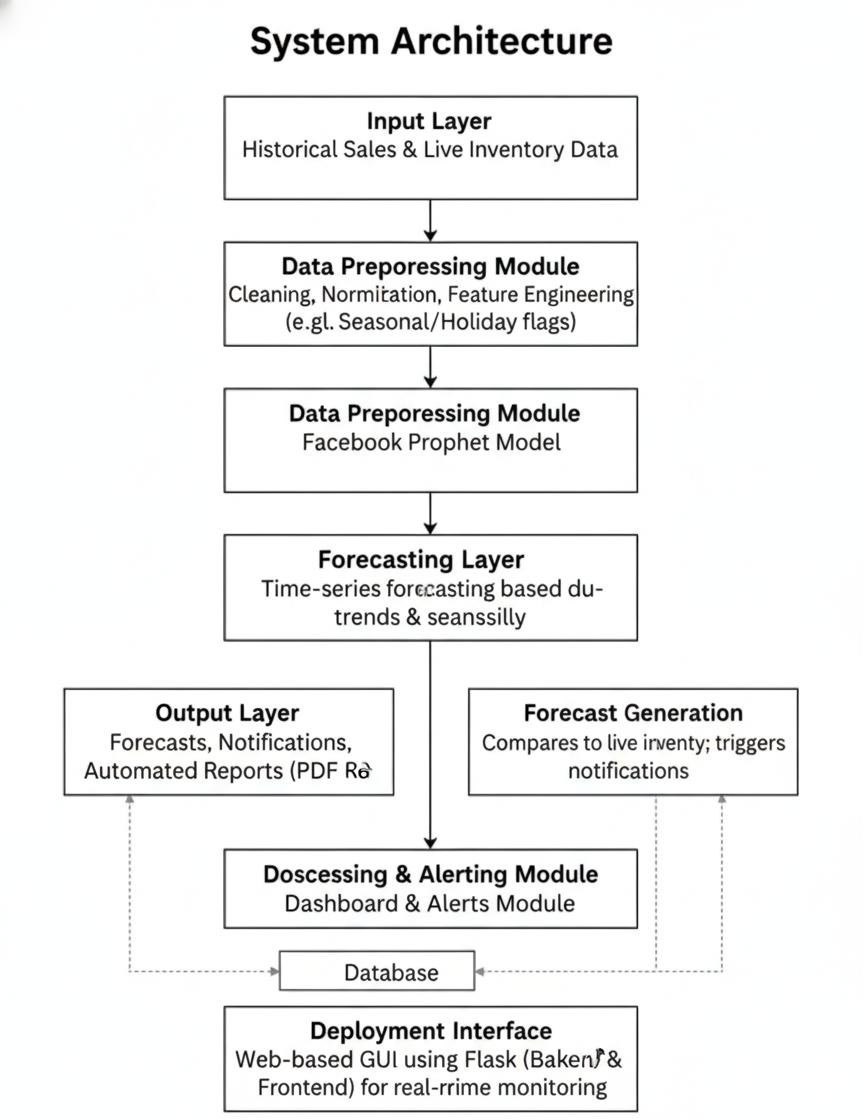
The proposed system uses a time-series forecasting approach based on the Facebook Prophet model to analyze historical sales patterns, seasonal trends, and holiday effects. Forecasted demand is continuously compared with live stock data to identify potential waste risks such as excess inventory or near-expiry products. The system also provides automated alerts and visual dashboards to support proactive decision-making. Experimental results show that the proposed solution can reduce food waste by approximately 25–30%, while improving inventory efficiency and operational planning. This study demonstrates that AI-driven forecasting can play a vital role in achieving sustainable and waste-aware retail operations.
Food waste has become a serious challenge in modern retail systems due to inaccurate demand estimation and inefficient inventory planning. Conventional forecasting approaches depend heavily on past averages and manual decision-making, which often leads to overstocking, spoilage, and financial loss. This research presents a final-phase implementation of an AI-based smart forecasting system aimed at reducing food waste through accurate demand prediction and automated inventory insights.
The proposed system uses a time-series forecasting approach based on the Facebook Prophet model to analyze historical sales patterns, seasonal trends, and holiday effects. Forecasted demand is continuously compared with live stock data to identify potential waste risks such as excess inventory or near-expiry products. The system also provides automated alerts and visual dashboards to support proactive decision-making. Experimental results show that the proposed solution can reduce food waste by approximately 25–30%, while improving inventory efficiency and operational planning. This study demonstrates that AI-driven forecasting can play a vital role in achieving sustainable and waste-aware retail operations.