
Automated Detection and Classification of Parkinson's Disease Using Electroencephalography: A Review
DOI:
https://doi.org/10.65521/ijacte.v15i1S.1316Keywords:
Abstract
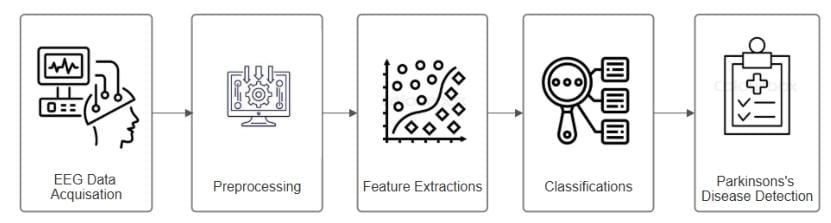
In this review paper we have discuss in depth knowledge of Parkinson's disease (PD) is a progressive neurodegenerative condition with a variety of motor and non-motor symptoms, early and precise diagnosis is essential for successful treatment. A prospective route for the automated identification of neurological disorders like Parkinson's disease (PD) is electroencephalography (EEG), a non-invasive and economical technique for examining brain activity. The state-of-the-art in automated PD detection and classification using EEG data is examined in this study, with a focus on developments in deep learning (DL) and machine learning (ML) techniques for improved diagnostic precision. In particular, it looks at a variety of signal processing approaches, feature extraction strategies, and how well different classification algorithms distinguish PD patients from healthy controls. The potential of EEG-based biomarkers for monitoring the course of a disease and the effectiveness of treatment is also covered in the article, opening the door to tailored therapeutic interventions. By combining current research to identify areas for innovation in automated EEG analysis, the main objective is to present a thorough overview of current obstacles and future prospects in utilising EEG for early and reliable PD diagnosis and monitoring.
Downloads
Published
How to Cite
Issue
Section
License

This work is licensed under a Creative Commons Attribution-NoDerivatives 4.0 International License.
