MediQueue: Queue Optimization in Healthcare using Machine Learning
DOI:
https://doi.org/10.65521/ijeecs.v15i1S.3052Keywords:
Abstract
Healthcare institutions frequently encounter operational challenges related to patient overcrowding, prolonged waiting times, inefficient appointment scheduling, and uneven resource utilization. Traditional queue management systems in hospitals and clinics often rely on static scheduling methods and manual administrative processes, which are insufficient for handling dynamic patient inflow and real-time healthcare demands. These inefficiencies negatively impact patient satisfaction, medical service quality, and hospital productivity. To address these challenges, this research proposes “MediQueue,” an intelligent healthcare queue optimization framework powered by Machine Learning and real-time analytical technologies.
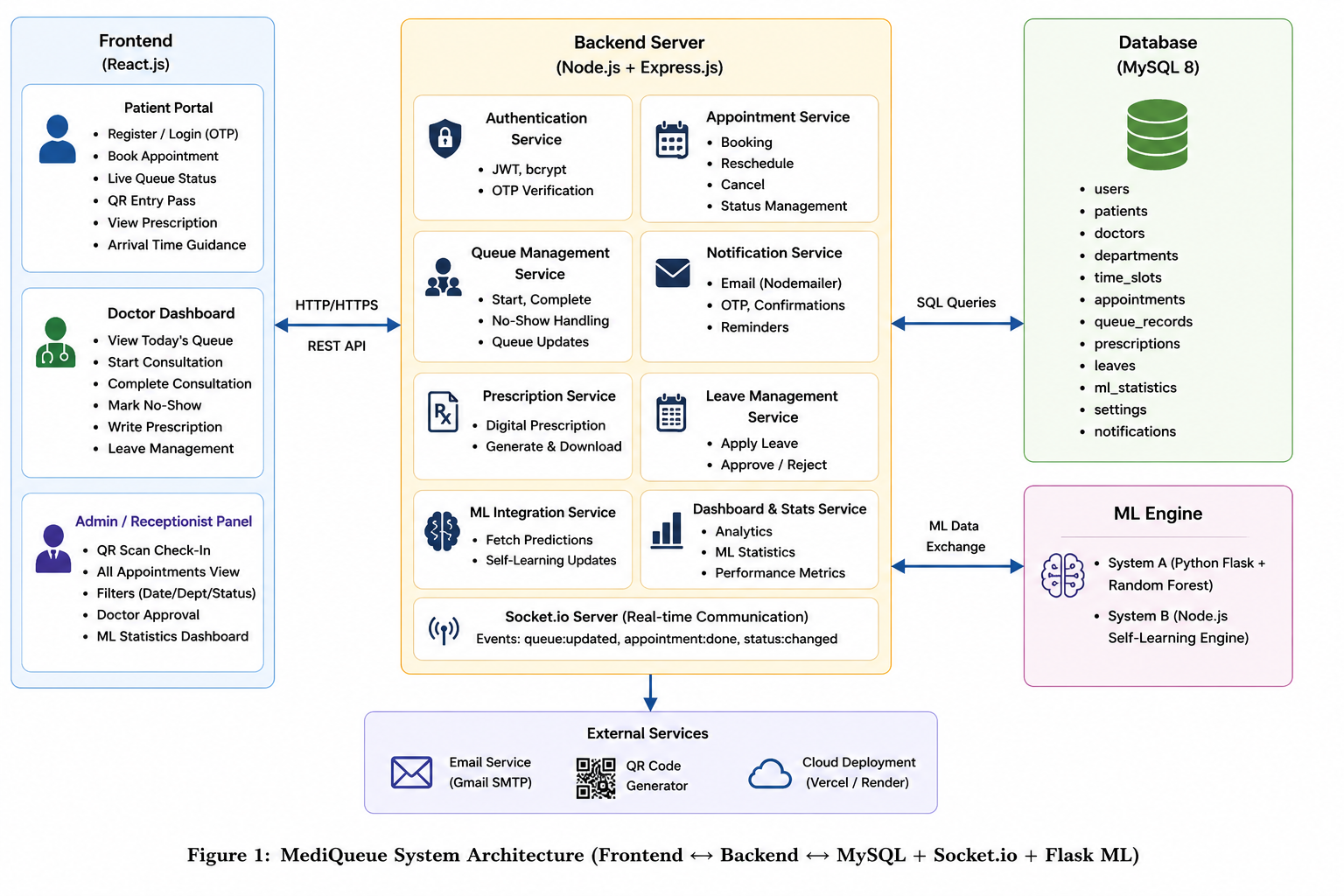
The proposed MediQueue framework integrates machine learning algorithms, predictive analytics, cloud-based healthcare management, and intelligent scheduling mechanisms to optimize patient flow and reduce waiting times in healthcare environments. The system collects and processes real-time patient data, appointment records, doctor availability, treatment durations, and emergency case priorities to generate adaptive queue management strategies. Predictive models analyze historical and live healthcare datasets to forecast patient congestion, optimize appointment allocation, and improve resource distribution across hospital departments.
The framework incorporates intelligent prioritization mechanisms that dynamically classify patients based on urgency level, treatment requirements, and waiting-time predictions. Additionally, AI-powered recommendation modules support automated scheduling adjustments and efficient healthcare workflow management. Cloud-enabled infrastructure ensures scalability, centralized monitoring, and secure accessibility for multi-department healthcare operations.