A Comprehensive Review of Segmentation and Classification of Renal Tumors Using EfficientNet-Based U-Net and Epistemic Neural Networks
DOI:
https://doi.org/10.65521/ijeecs.v13i1.2658Keywords:
Abstract
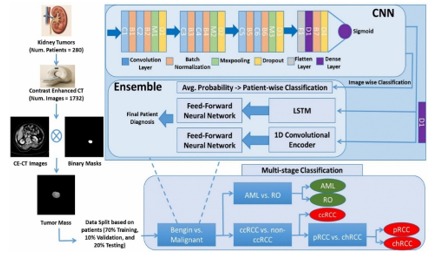
Renal tumors, including renal cell carcinoma (RCC), present significant diagnostic challenges due to their heterogeneous nature and variability in medical imaging modalities such as computed tomography (CT) and magnetic resonance imaging (MRI). Accurate segmentation and classification are essential for effective diagnosis and treatment planning. In recent years, deep learning techniques have revolutionized medical image analysis by enabling automated and precise tumor detection.This review focuses on recent advancements in renal tumor segmentation and classification using EfficientNet-based U-Net architectures and epistemic neural networks. EfficientNet-based U-Net models enhance feature extraction and multi-scale representation, enabling accurate tumor boundary delineation. Epistemic neural networks introduce uncertainty estimation, improving model reliability and clinical decision-making.The review highlights key developments such as hybrid architectures, transfer learning, attention mechanisms, and uncertainty modeling. Deep learning models achieve Dice scores above 0.85 and classification accuracy exceeding 90% in several studies. However, challenges such as data scarcity, model generalization, and interpretability remain significant barriers. Overall, integrating EfficientNet-based segmentation with uncertainty-aware classification provides a promising approach for improving renal tumor detection systems and supporting clinical diagnosis.