
A Light Weight Neural Network Model for Classification of Dementia
DOI:
https://doi.org/10.65521/ijaece.v15i1S.1379Keywords:
Abstract
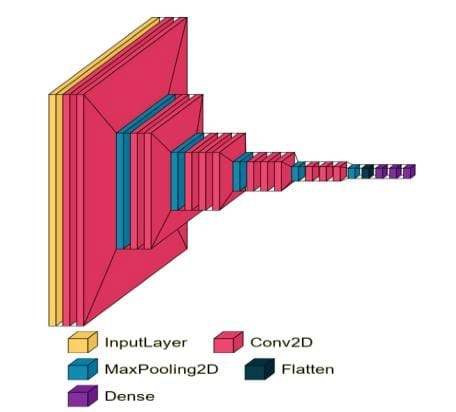
Dementia is a progressive neurodegenerative disease that is a major challenge to healthcare systems around the world and hence there is the need to have accurate and automated means of diagnosis. SMRI has become a useful modality for detecting neuroanatomical changes during the development of dementia, and yet, manual interpretation is tedious and prone to error. This paper will discuss a deep learning-based method of multiclass dementia classification based on a transfer learning model on the VGG-16 convolutional neural network. A big publicly available Kaggle data set comprising of about 44,000 T1-weighted brain MRI images was used, which comprised of four clinically relevant classes such as Non-Demented, Very Mild Demented, Mild Demented as well as Moderate Demented. All pictures were downsampled to the constant resolution size at 224 x 224 pixels and categorized as grayscale inputs to retain structural information and making them computationally efficient. A fine-tuning approach that was under a controlled strategy was used by unfreezing convolutional layers consecutively, allowing the detailed examination of convolutional layers parameter adaptation and generalization behaviours. The evaluation of the model performance was conducted based on accuracy metrics, learning curves, and analysis of the confusion matrix to present both quantitative and class-wise information. The final training accuracy of the proposed model was 89 percent and a validation accuracy of 76 percent which showed that the model converged well and the generalization was also good. The confusion matrix showed that Non-Demented cases were highly specific with potential difficulties likely to arise in making a distinction between the early stages of dementia since there were minor neuroanatomical overlaps.
Downloads
Published
How to Cite
Issue
Section
License

This work is licensed under a Creative Commons Attribution-NoDerivatives 4.0 International License.
